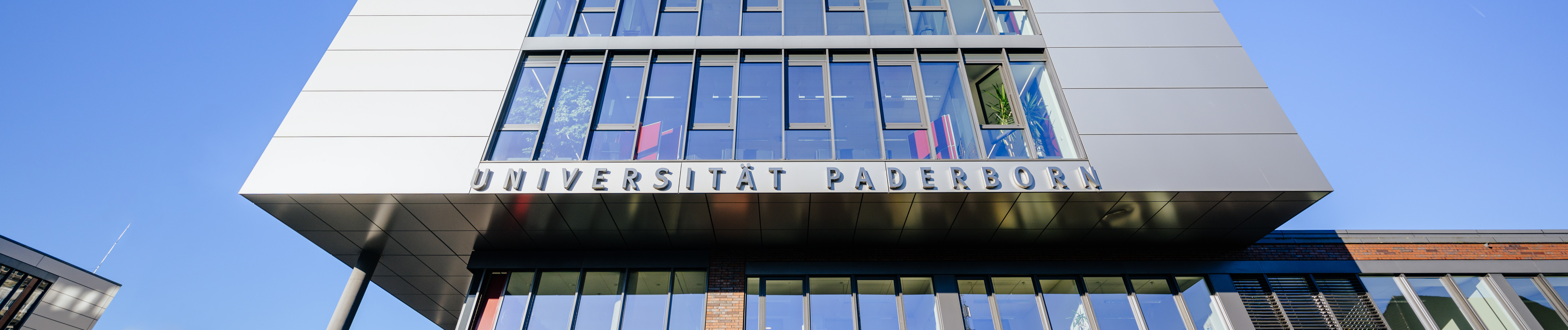
How can Computer Science be taught to pupils of different age groups in a way that is understandable, practical and up-to-date? On Monday 14 September 2026, around 360 teachers addressed this and many other questions at the 22nd NRW Computer Science Day at Paderborn University.
The event was organised by the ‘Computer Science Education in NRW’ (FG IBN) specialist group of the German Informatics Society (GI), in cooperation with Paderborn University and the Detmold District Government. The event was aimed at computer science teachers at all levels in general and vocational schools, trainee teachers and students.
The Computer Science Day centred on a total of 29 workshops, in which participants were able to get actively involved and engage with topics relevant to teaching practice. Various workshops were on offer for different school types and age groups.
Alongside workshops for lower and upper secondary levels, several sessions on Computer Science education were also on offer in primary schools. This highlighted that Computer Science education already plays an important role in primary schools and that corresponding teaching concepts and lesson ideas are becoming increasingly significant.
The workshops offered participants the opportunity to try out new methods, materials and approaches for themselves and to gain experience for their own teaching.
The workshop programme was complemented by two keynote speeches, which addressed key current topics in computer science education. The first keynote speech focused on the topic ‘Computer Science in Primary School’. The focus was on how computing topics can be taught in a way that is understandable and age-appropriate for young learners. Particular attention was paid to how fundamental computing concepts can be presented in such a way that children gain an initial introduction to Computer Science and can gain their own experience with Computer Science-related questions. The second keynote address was devoted to current developments in the field of artificial intelligence and their impact on computing lessons. It explored how computing lessons are changing as a result of rapid advances in AI, and what new challenges and opportunities this presents for schools and teaching.
Another feature of the Computing Day was an exhibition showcasing products on offer for school computing as well as technical and administrative products. The exhibitors presented solutions, materials and services relevant for use in a school setting. The exhibition offered teachers a further opportunity to find out about current developments and products, to familiarise themselves with various offerings and to engage in conversation with the relevant contact persons.
The commitment of schools to Computer Science education was also recognised. During the event, schools that had been particularly active in the National Computer Science Competition and the ‘Informatik-Biber’ competition were honoured. The awards highlighted the dedication with which schools and pupils engage with Computer Science beyond regular lessons and take part in relevant competitions.
Alongside the official programme, the Computer Science Day offered numerous opportunities for a personal exchange of experiences. Between workshops, during breaks and at the exhibition, teachers, students, trainee teachers, exhibitors and other participants engaged in conversation. This allowed them to share experiences from their own teaching, discuss new ideas and forge links with other computer science teachers. It is precisely this exchange that forms a vital part of such a professional development event, enabling successful teaching ideas and practical experiences to be passed on beyond the confines of one’s own school.
WDR was also present: Television was also on site at the 22nd NRW Computer Science Day. WDR reported on the event and the topics covered there as part of the ‘Lokalzeit OWL’ programme on 14 September 2026.
The television report is available in the ARD Mediathek.