Geometric flows and surface PDEs
PDEs with dynamic boundary conditions
Adaptivity for surface PDEs
Mean curvature flow
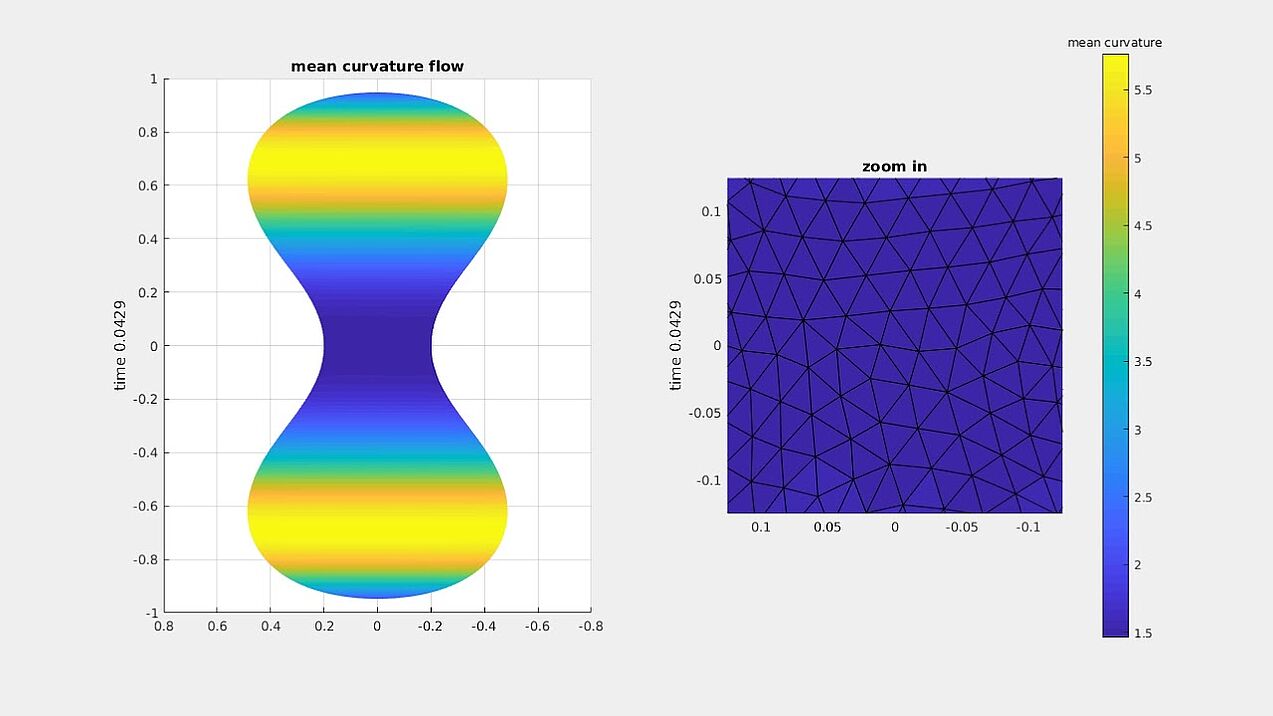
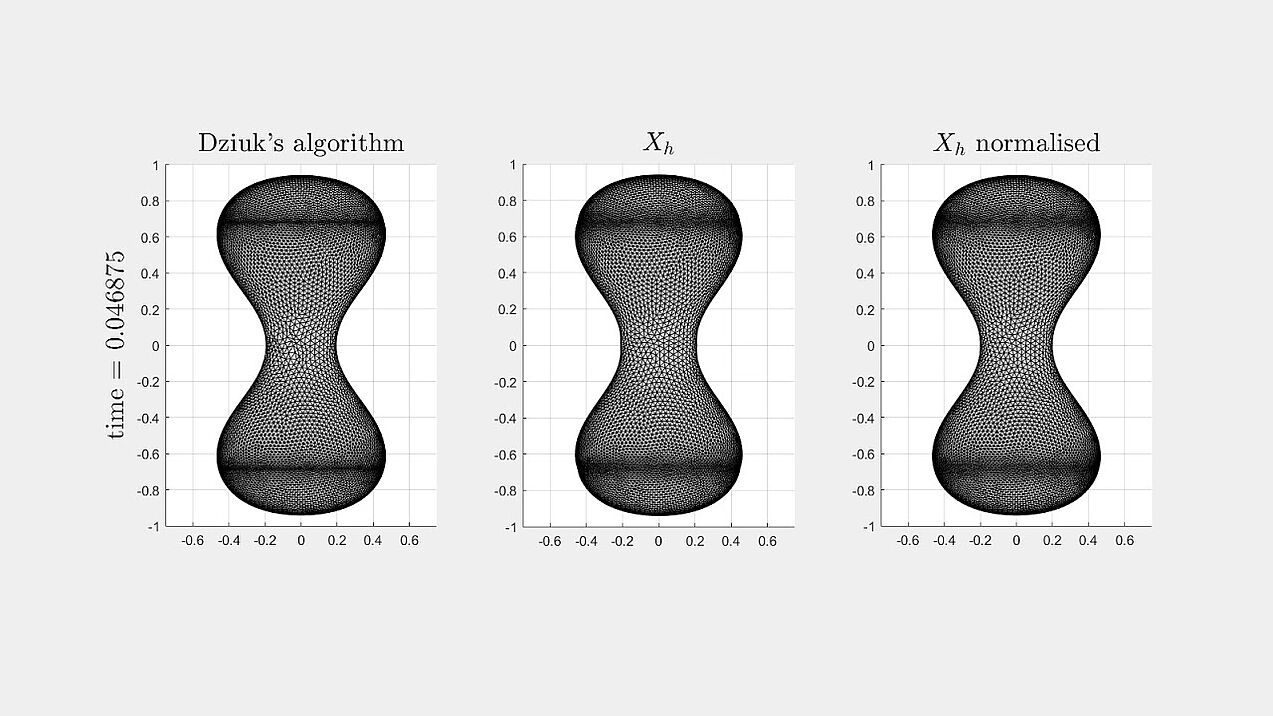
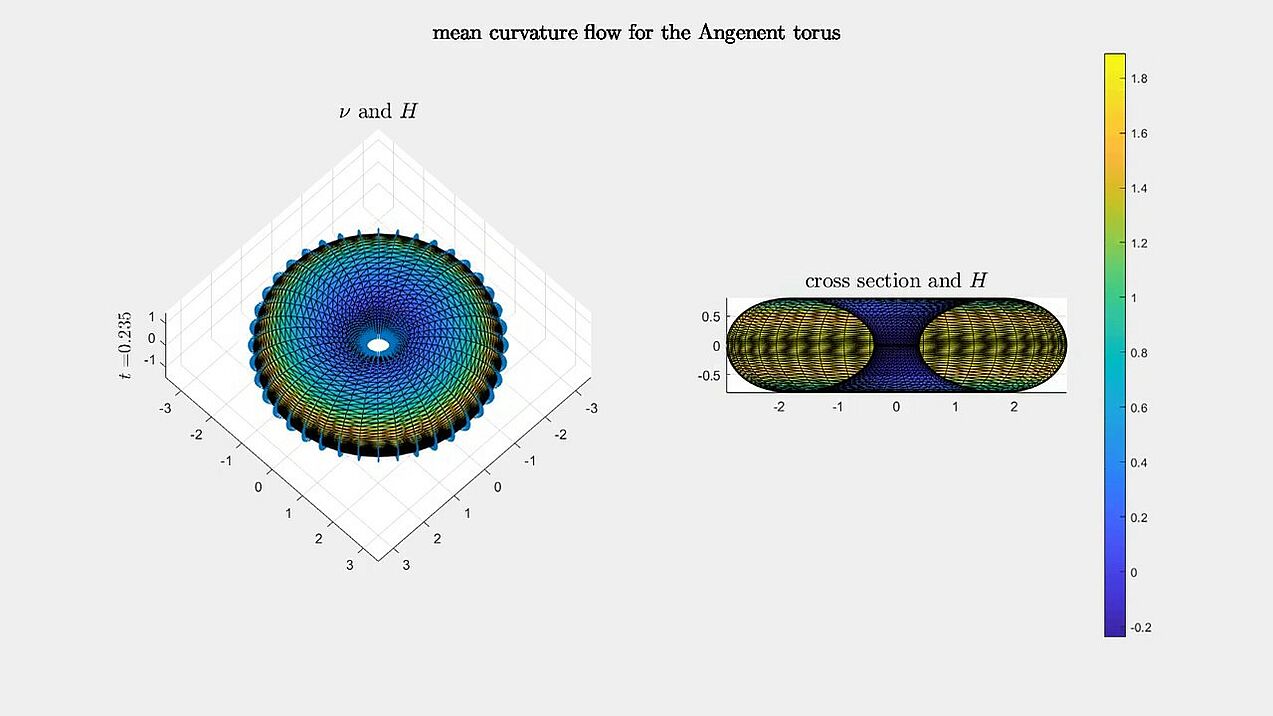
Numerical experiments for mean curvature flow algorithm from our paper.
A dumbbell-shaped surface developing a pinch singularity along the flow (with a zoom-in on the singularity).
Forced mean curvature flow
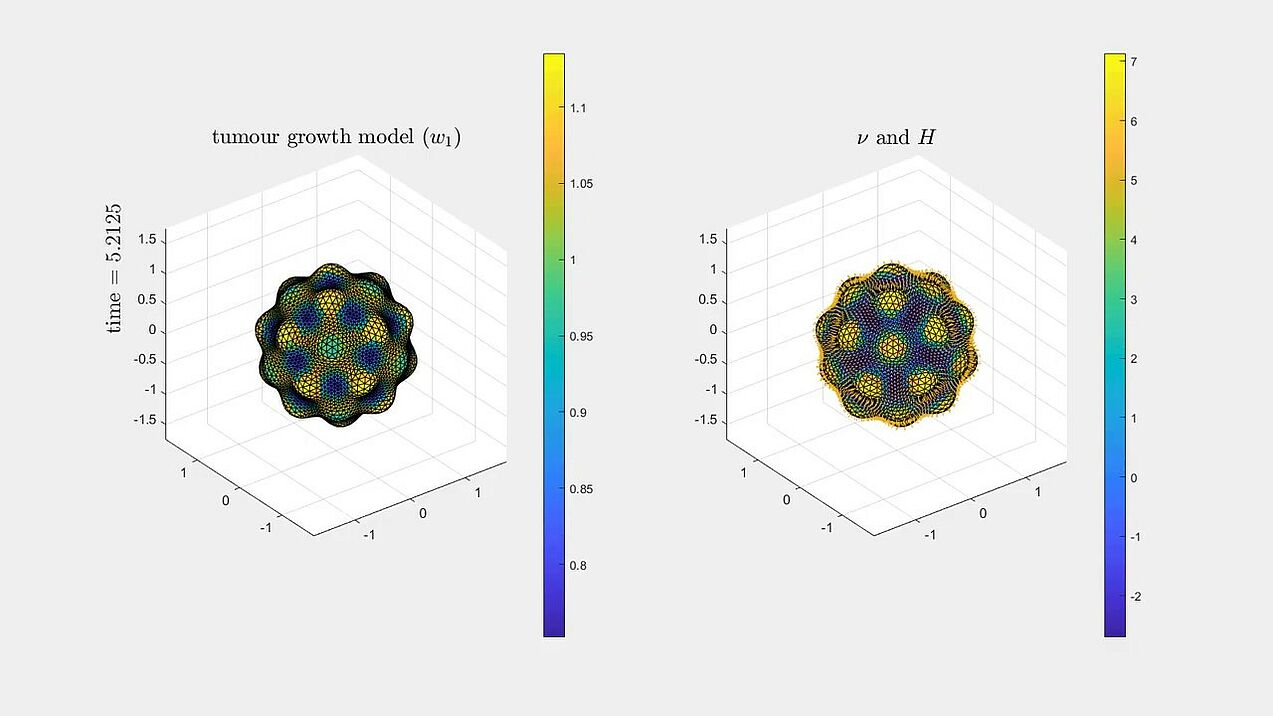
Numerical experiments for a tumour growth model using the algorithm from the paper (with two different reaction parameters \gamma = 30 and 300):
Willmore flow
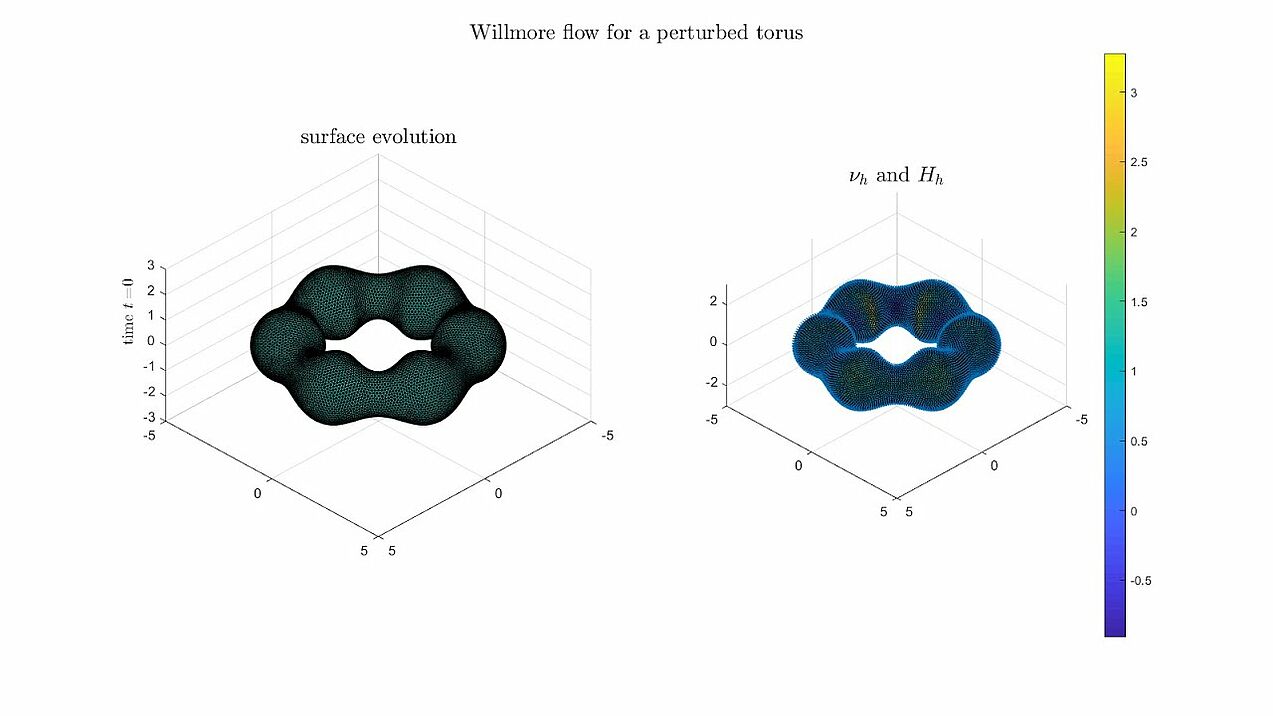
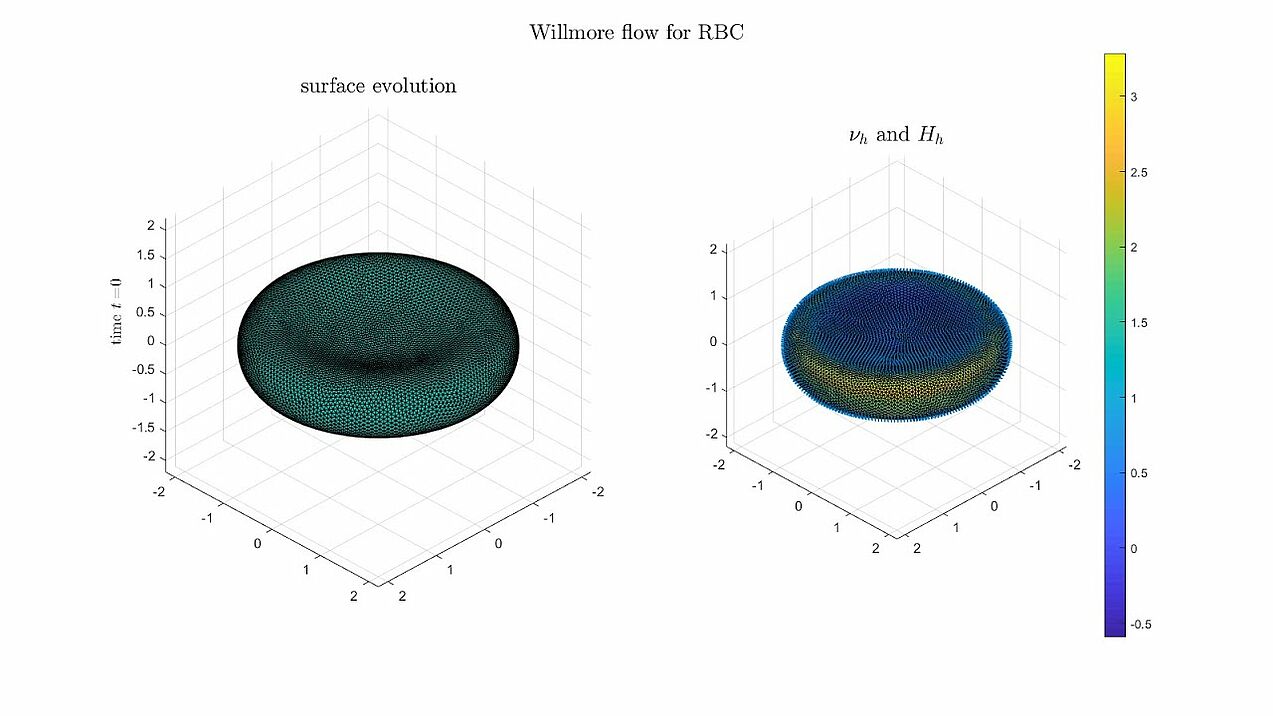
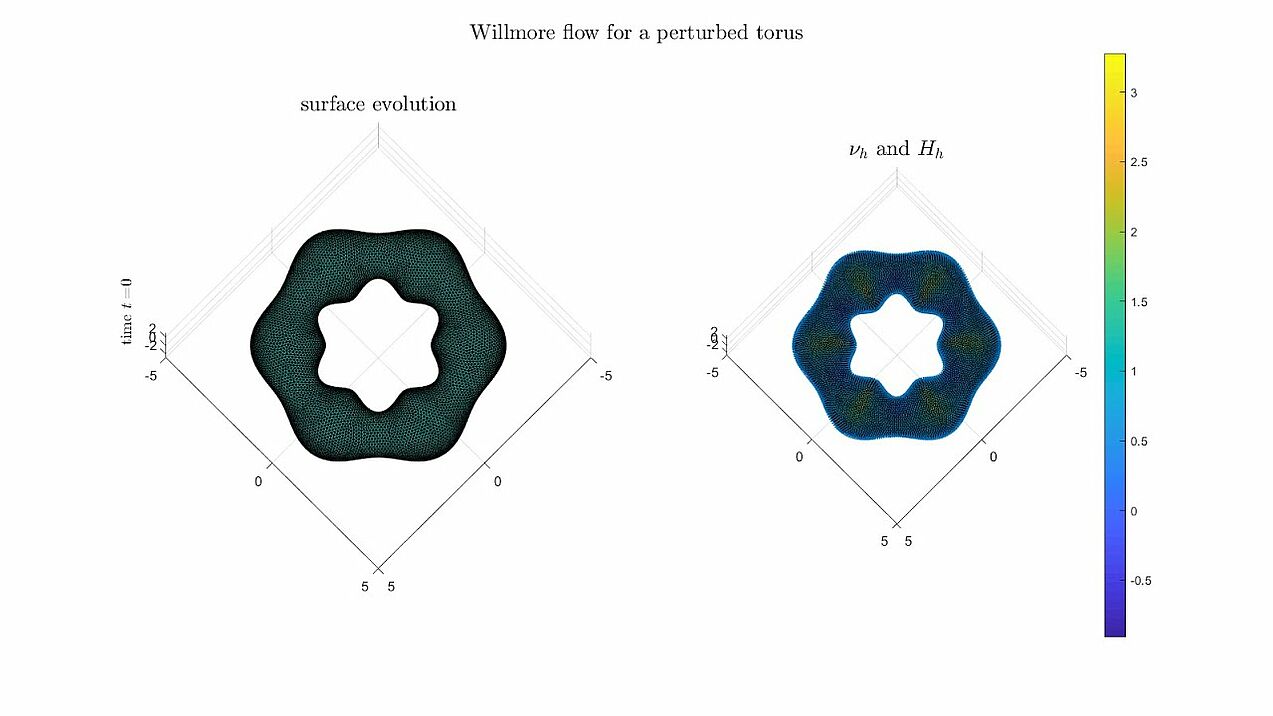
Some numerical experiments for Willmore flow using the algorithm analysed in the paper.
- Topologically spherical objects are known to converge to a sphere, while minimising the Willmore energy (W(\Gamma) \to 8\pi).
- Surfaces of genus 1 are converging to a Clifford torus minimising the Willmore energy (W(\Gamma) \to 4\pi^2).
Generalised mean curvature flow
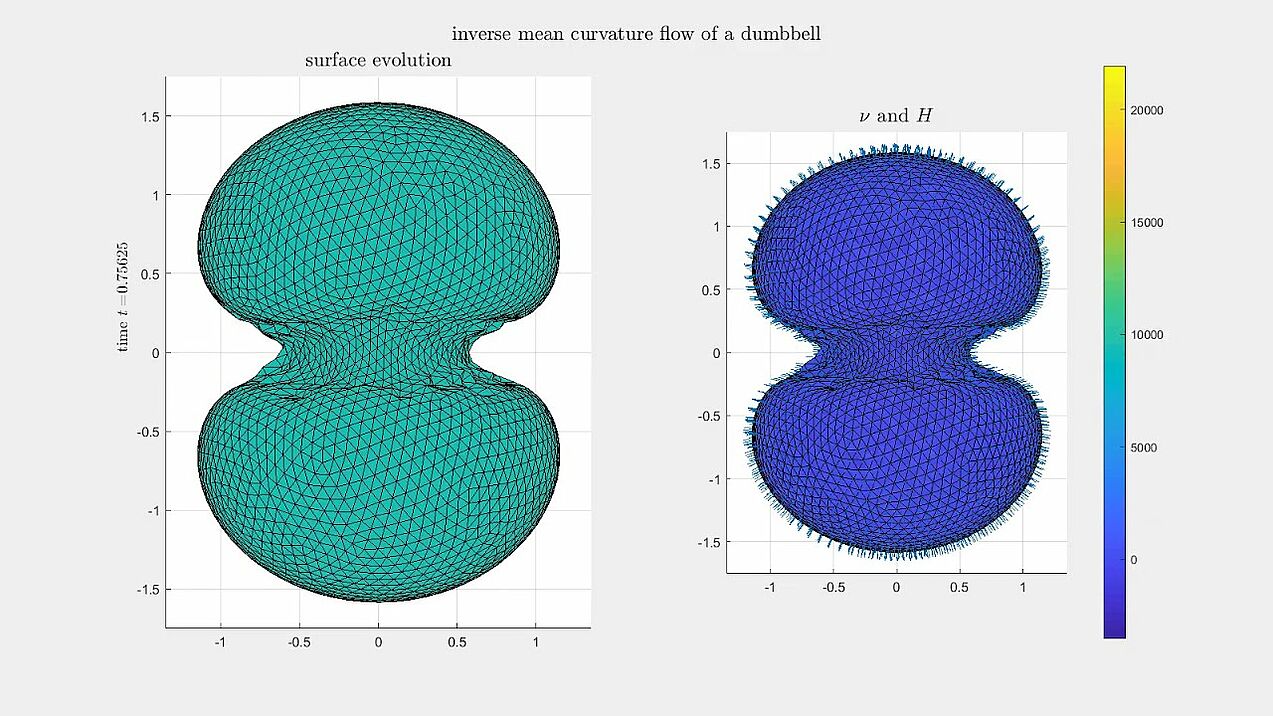
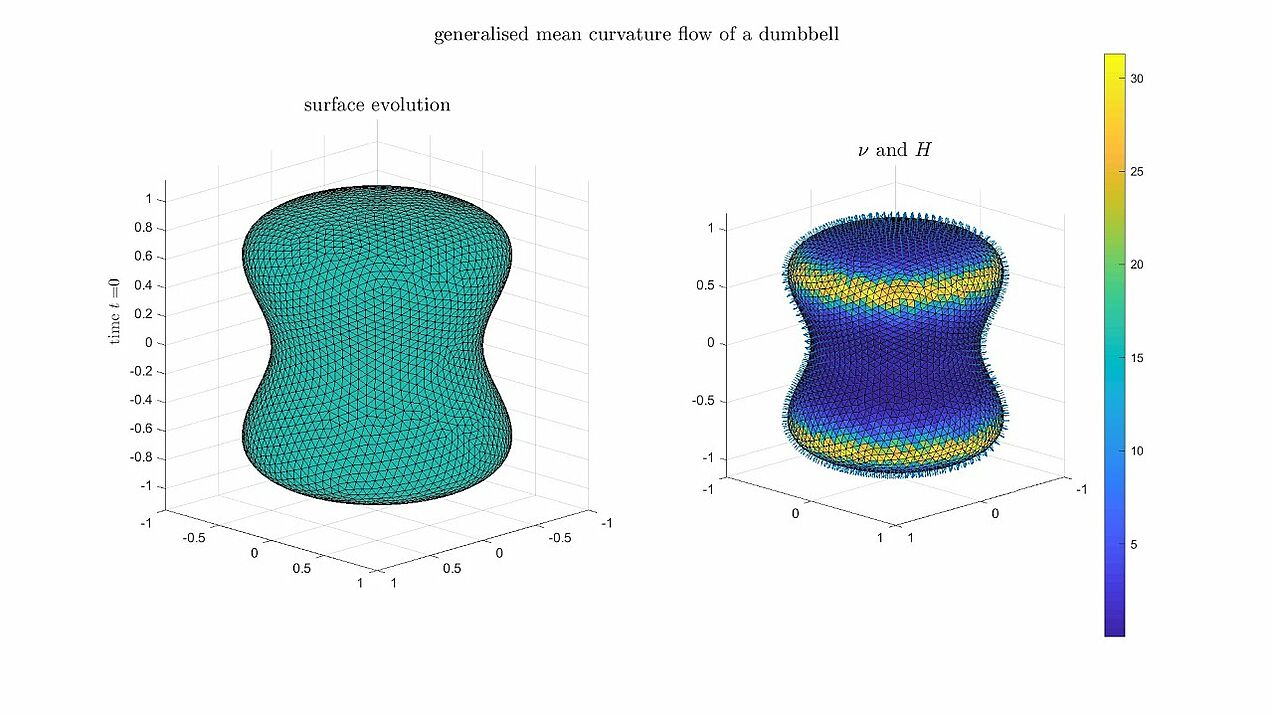
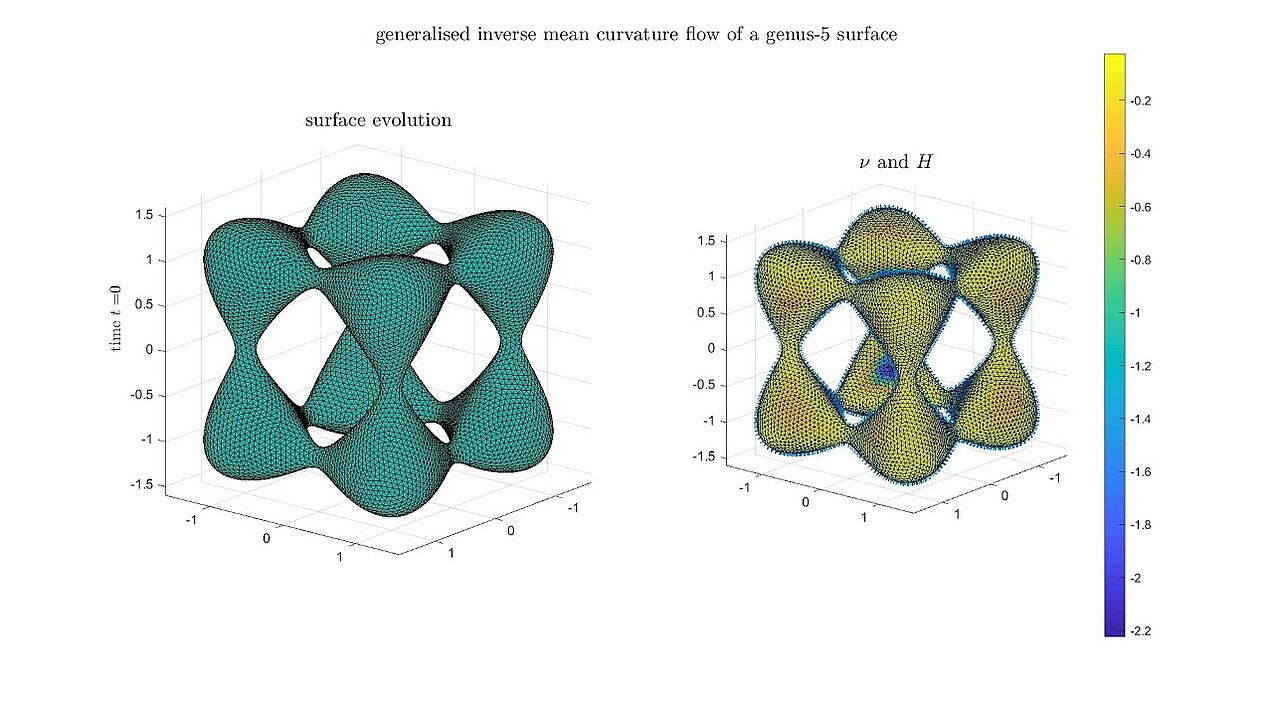
Numerical experiments for an algorithm for generalised mean curvature flows, i.e. the surface velocity is given by v = - V(H) \nu_\Gamma.
A non-convex dumbbell-shaped surface evolving towards a singularity along inverse mean curvature flow (V(H) = - 1 / H).
Mean curvature flow in higher codimension
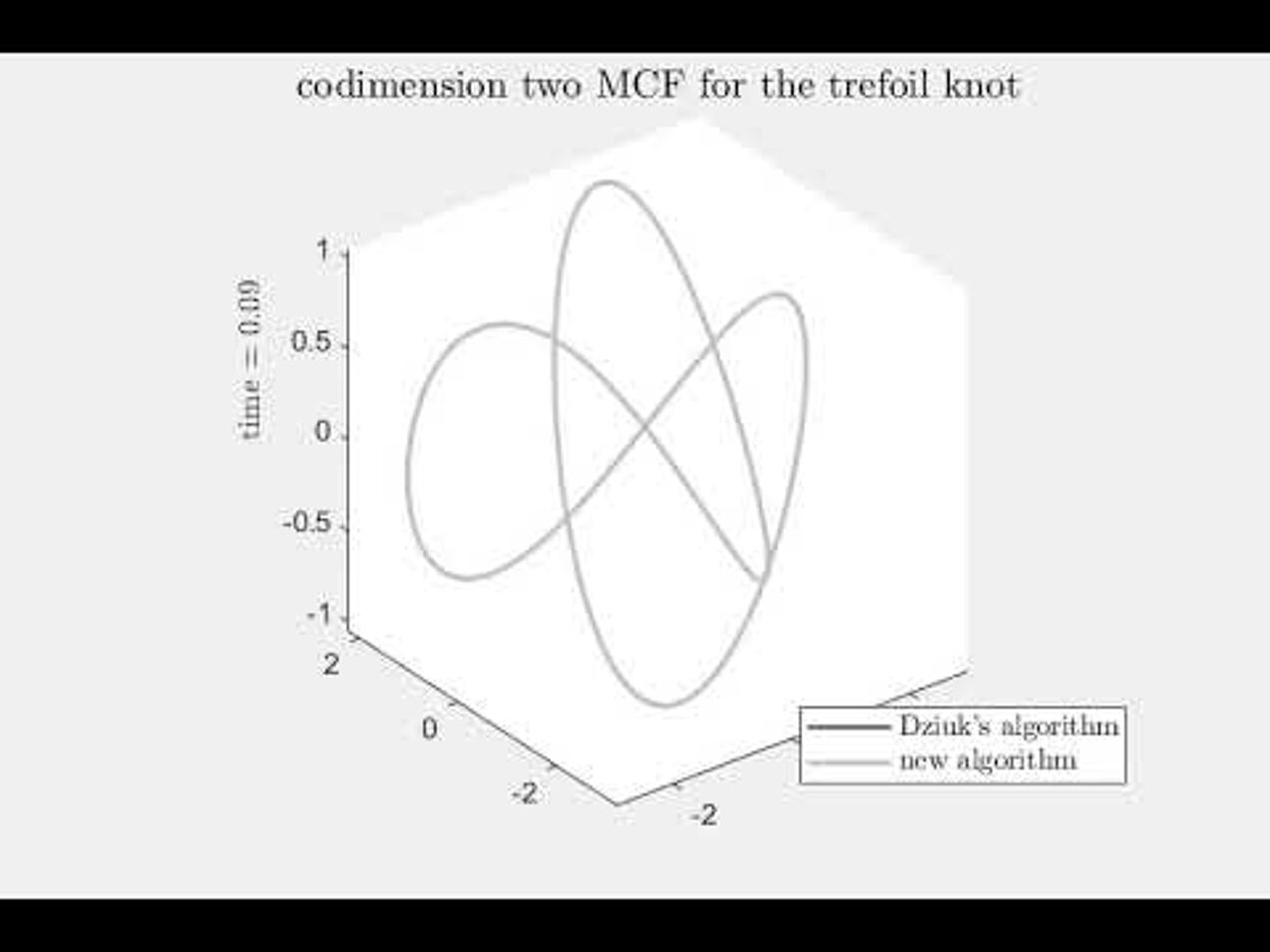
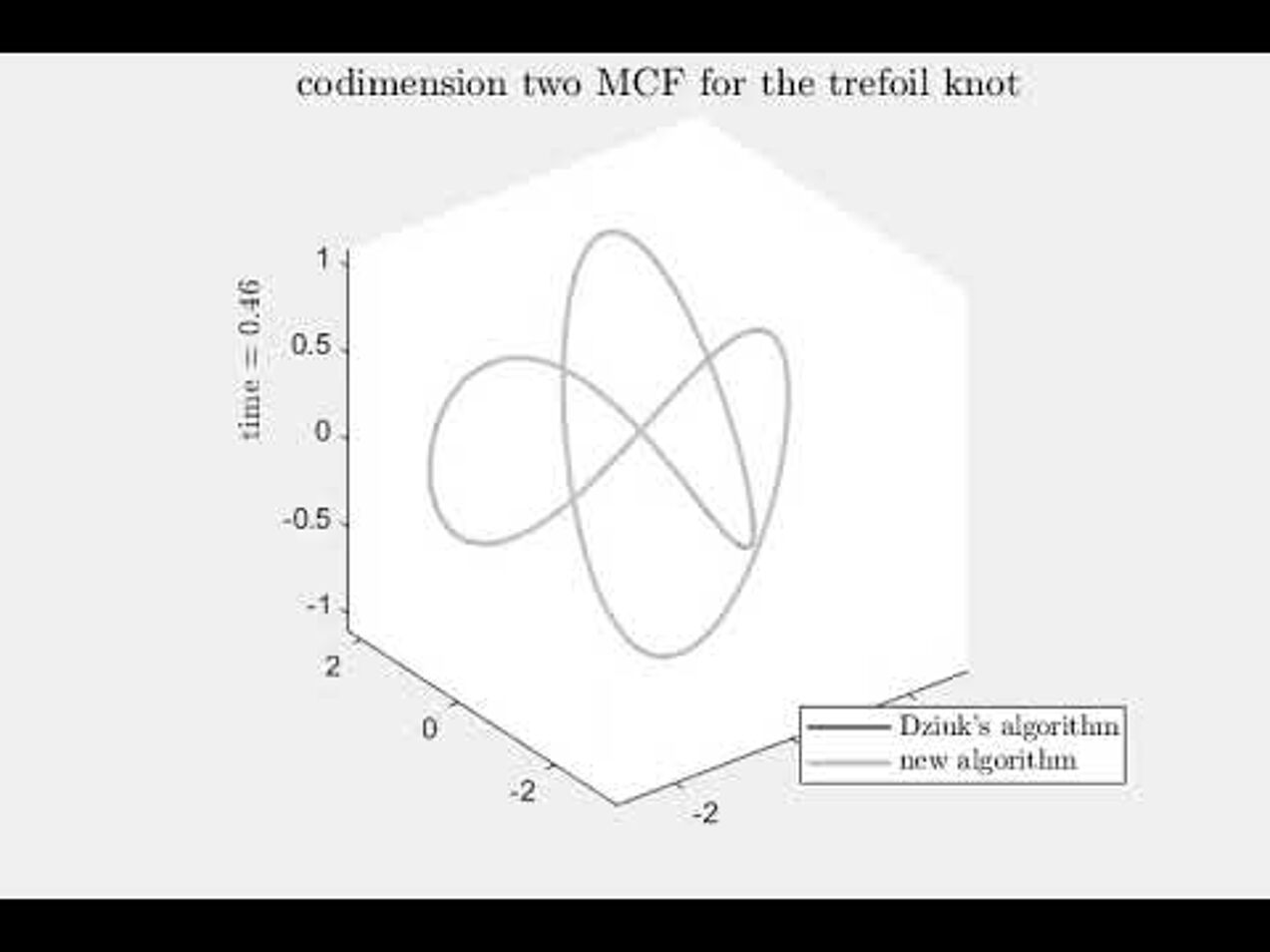
Numerical experiments for an algorithm for mean curvature flow in codimension two.
A trefoil knot evolving under mean curvature flow in codimension 2.
Mean curvature flow interacting with diffusion
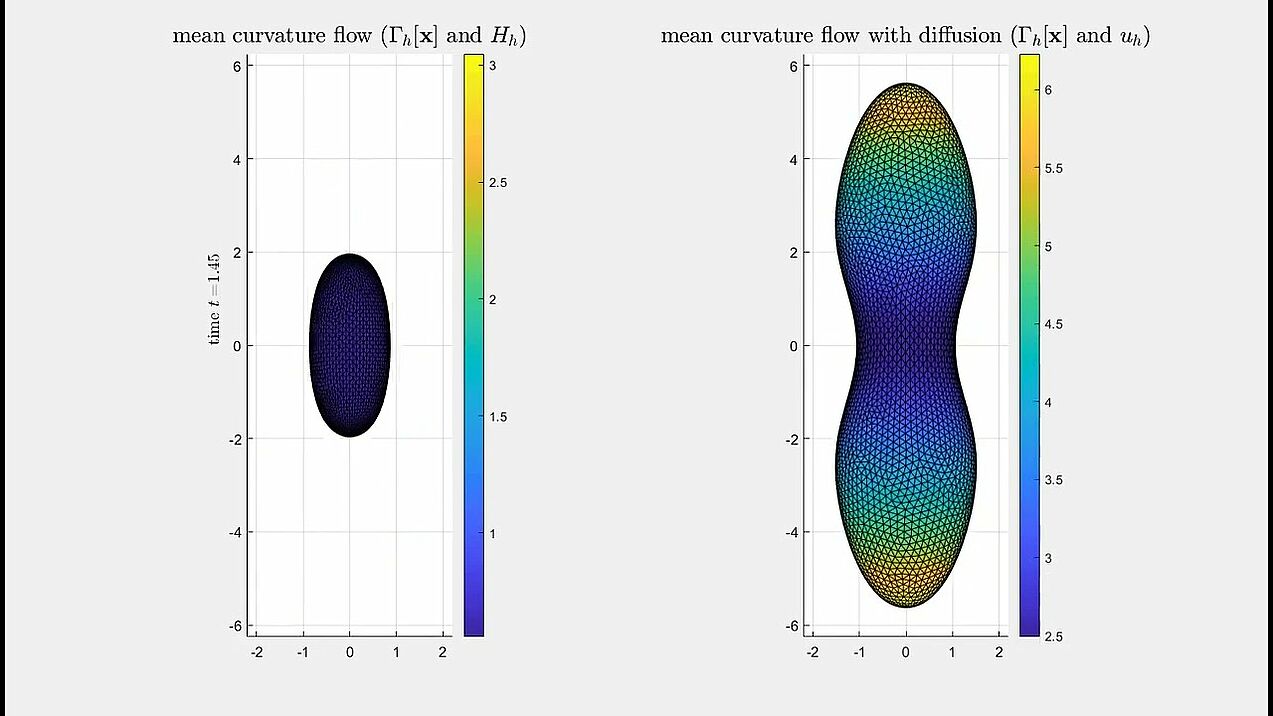
Numerical experiments for an algorithm for the interaction of mean curvature flow and diffusion on closed surfaces. This model was first developed and studied by Bürger (University of Regensburg).
Mean curvature flow interacting with diffusion on an elongated ellipsoid.
Numerical surgery for mean curvature flow
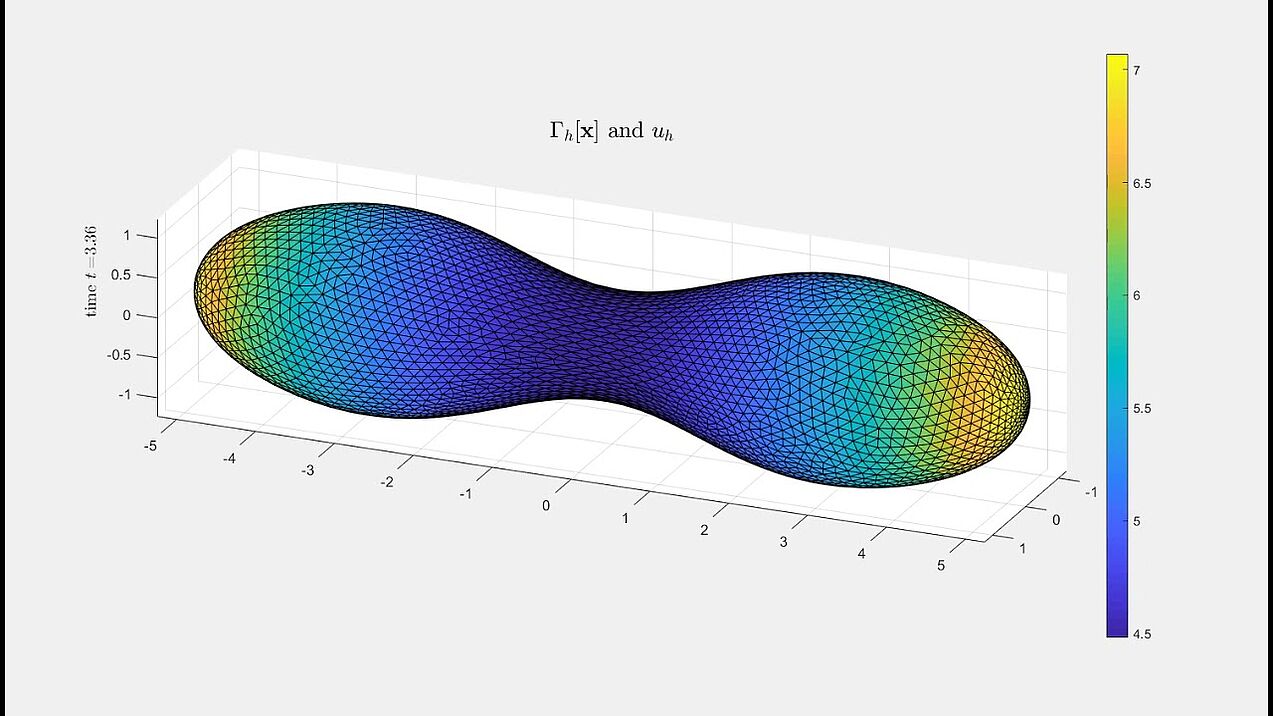
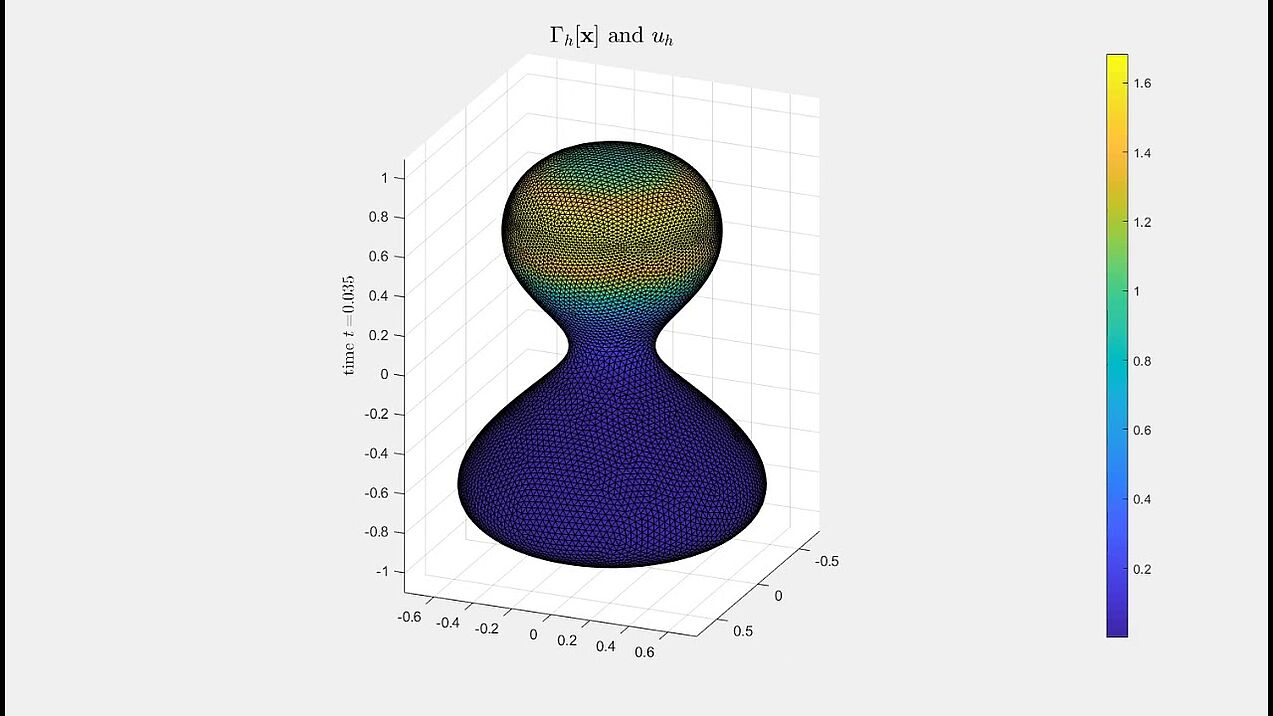
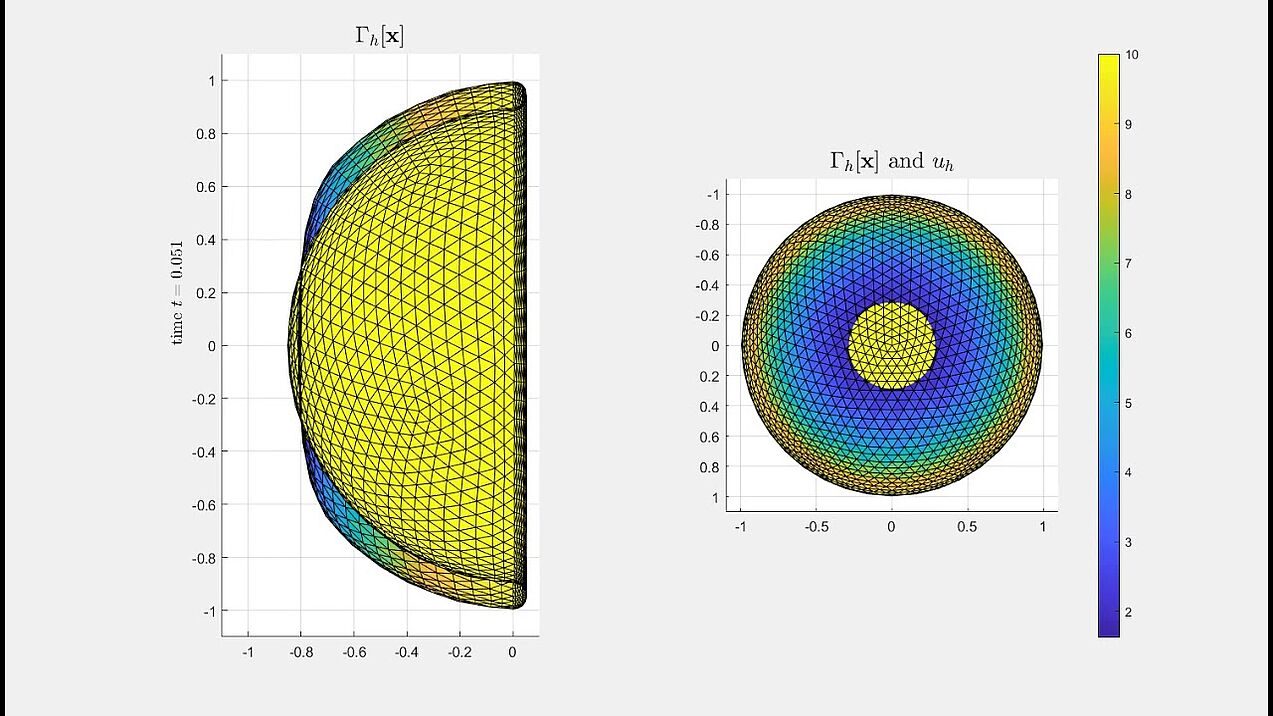
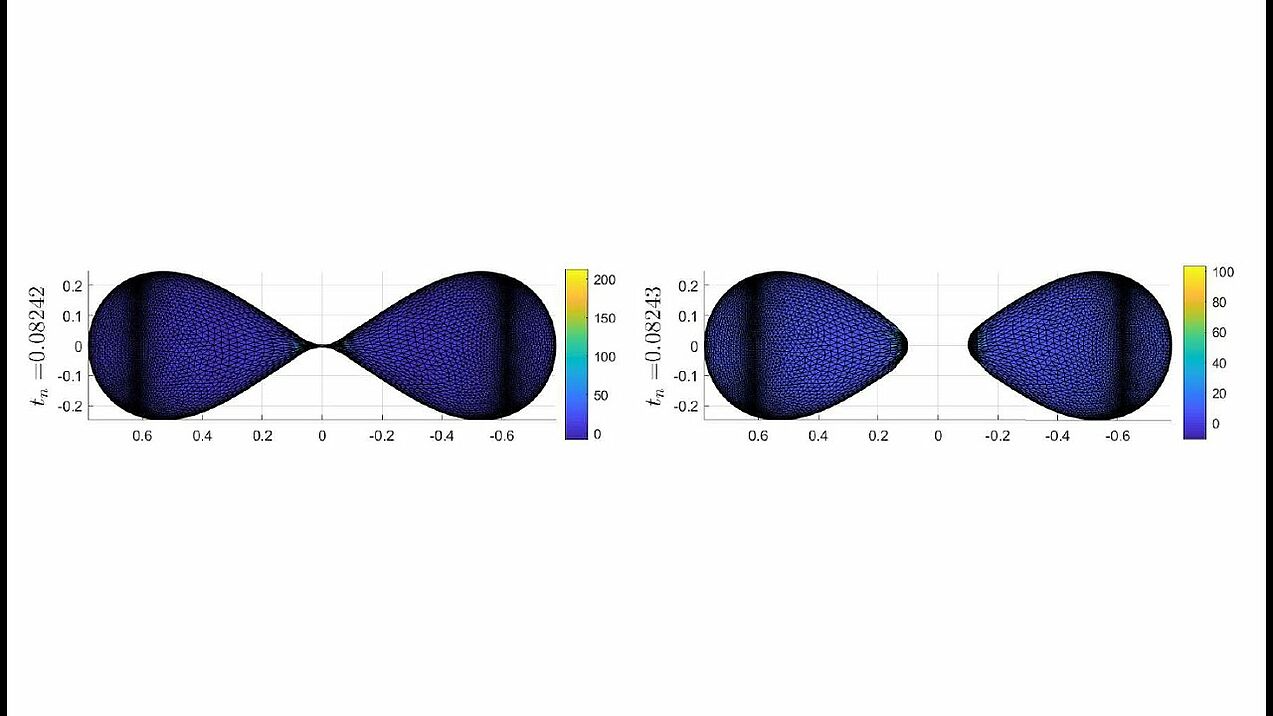
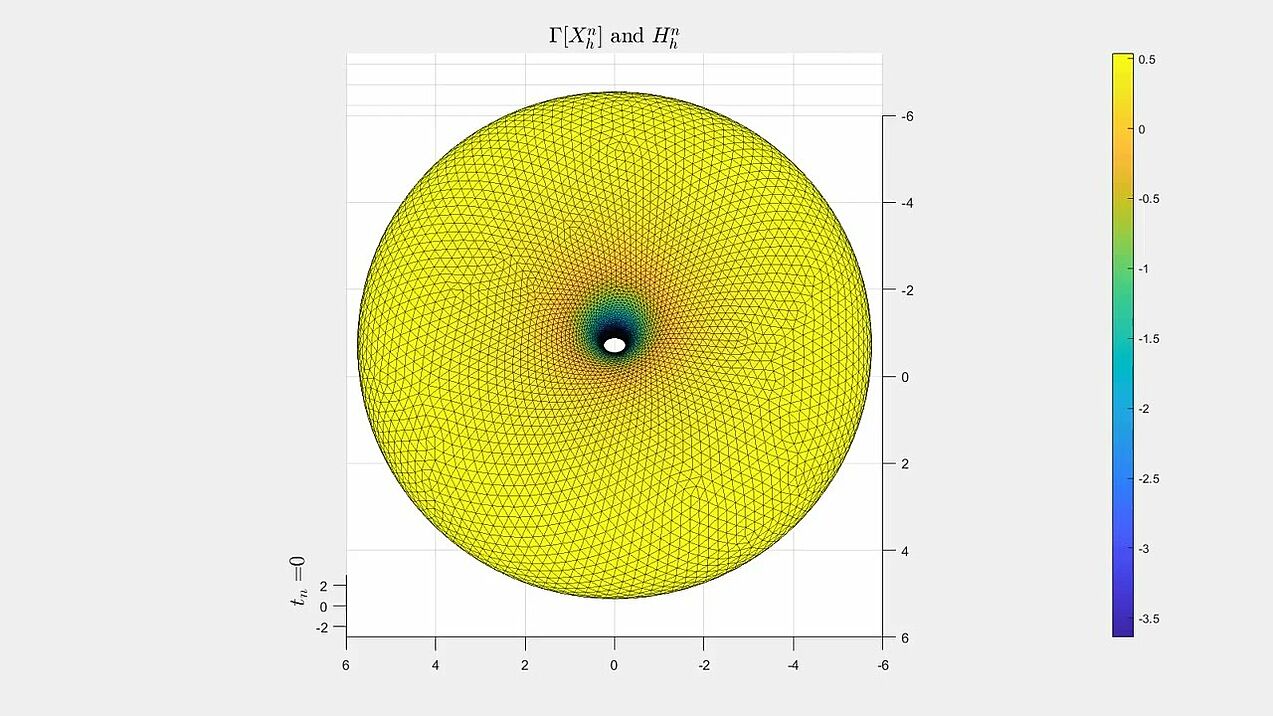
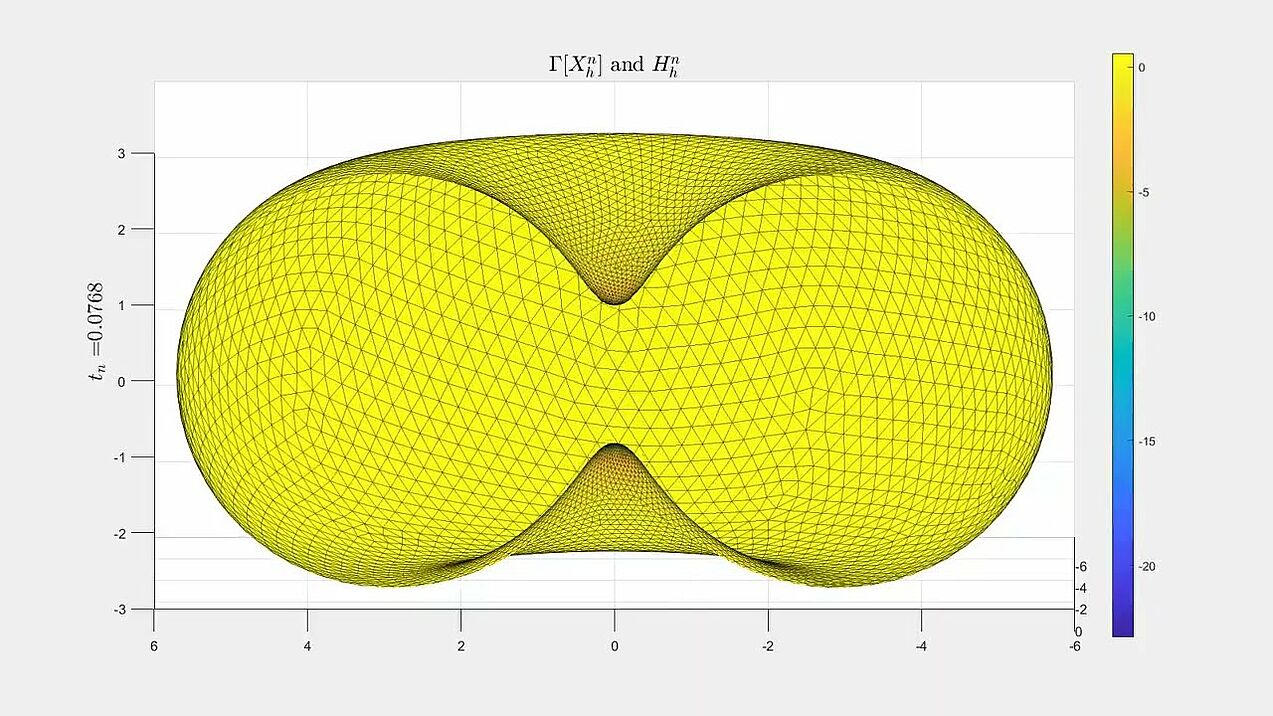
Inspired by surgery process of Huisken & Sinestrari and Brendle & Huisken, this paper proposes a numerical mean curvature flow algorithm with surgery for surfaces.
Resolving a pinch singularity of a dumbbell-shaped surface.
Bulk–surface model of tumour growth
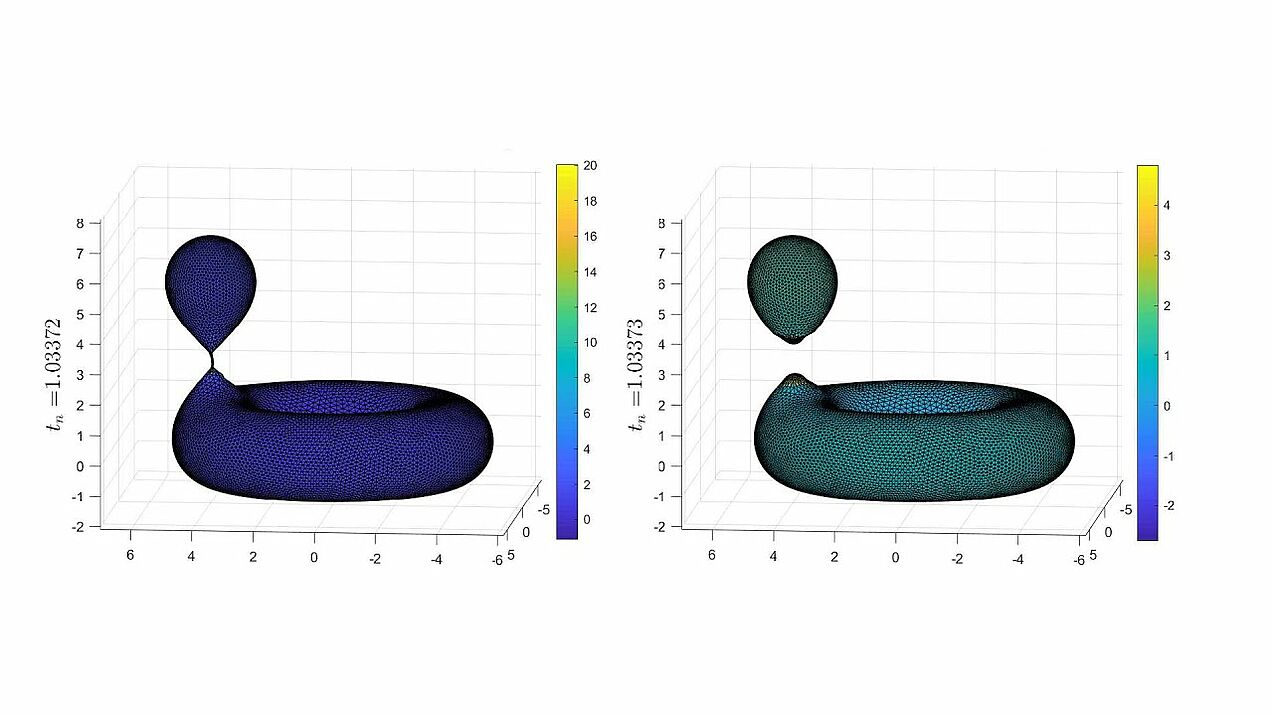
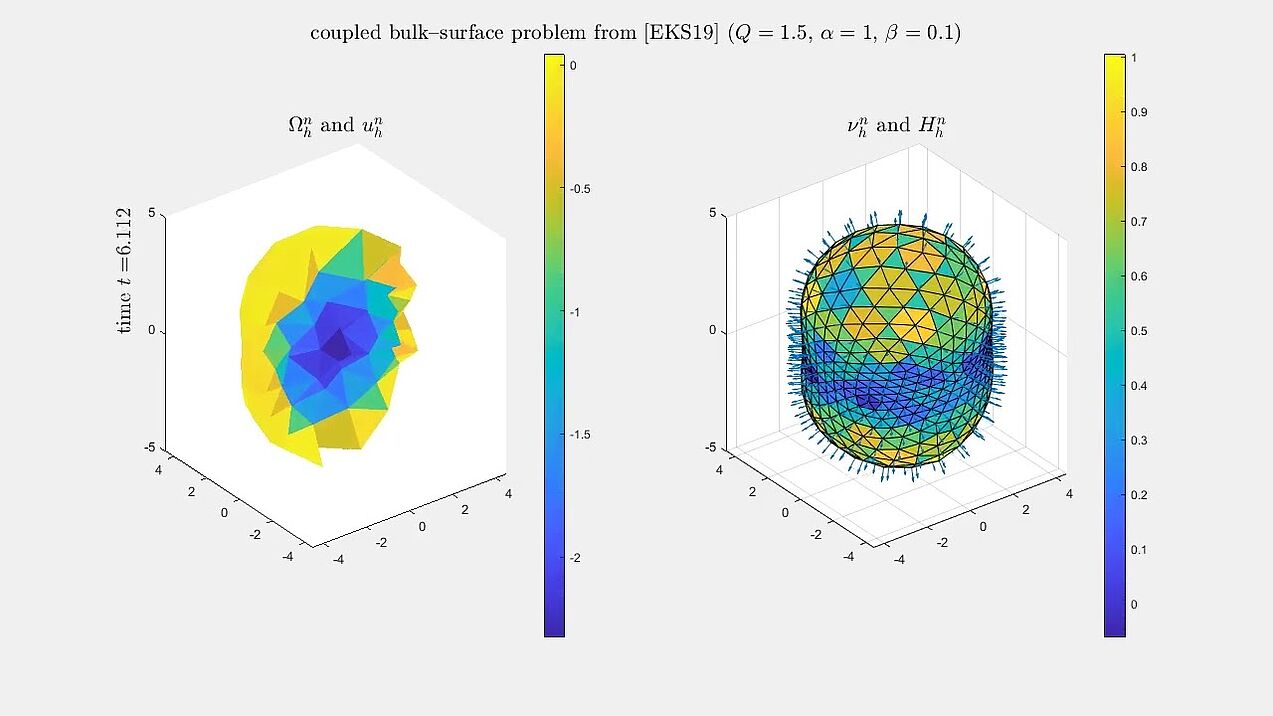
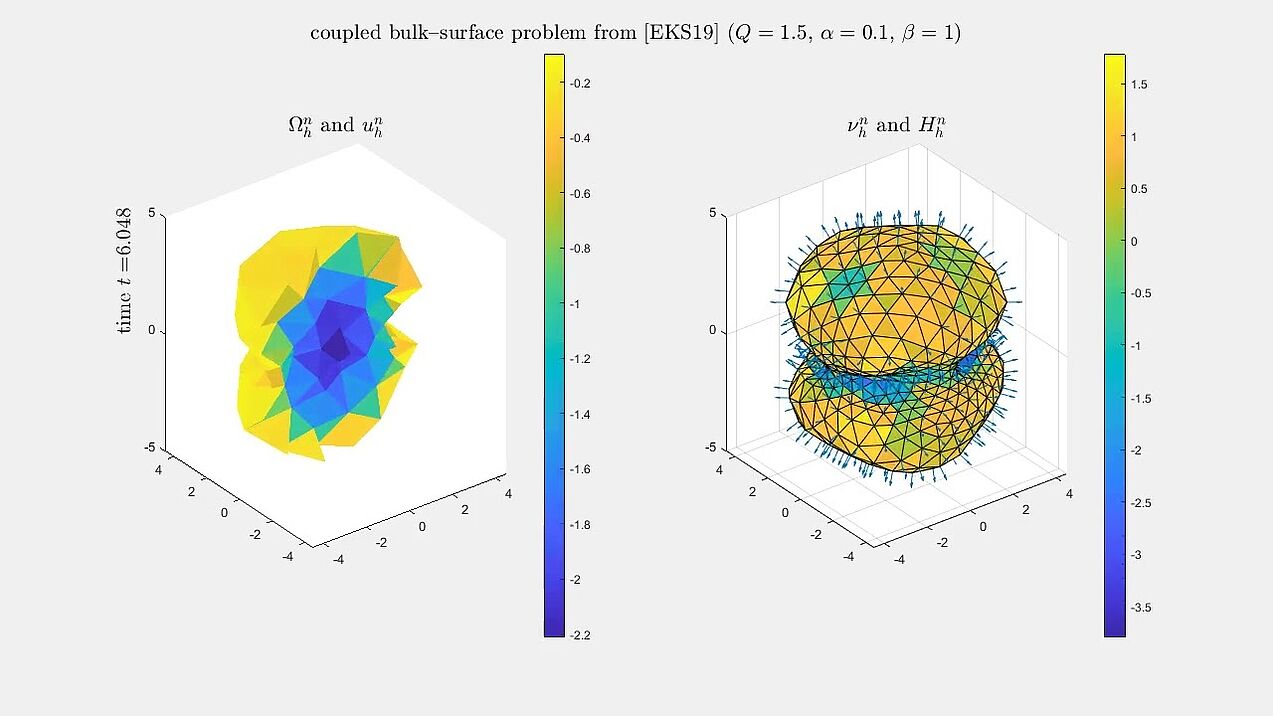
Numerical simulations for an evolving bulk--surface finite element method for a model of tissue growth, which is a modification of the model of Eyles, King and Styles (2019).
Anisotropic mean curvature flow
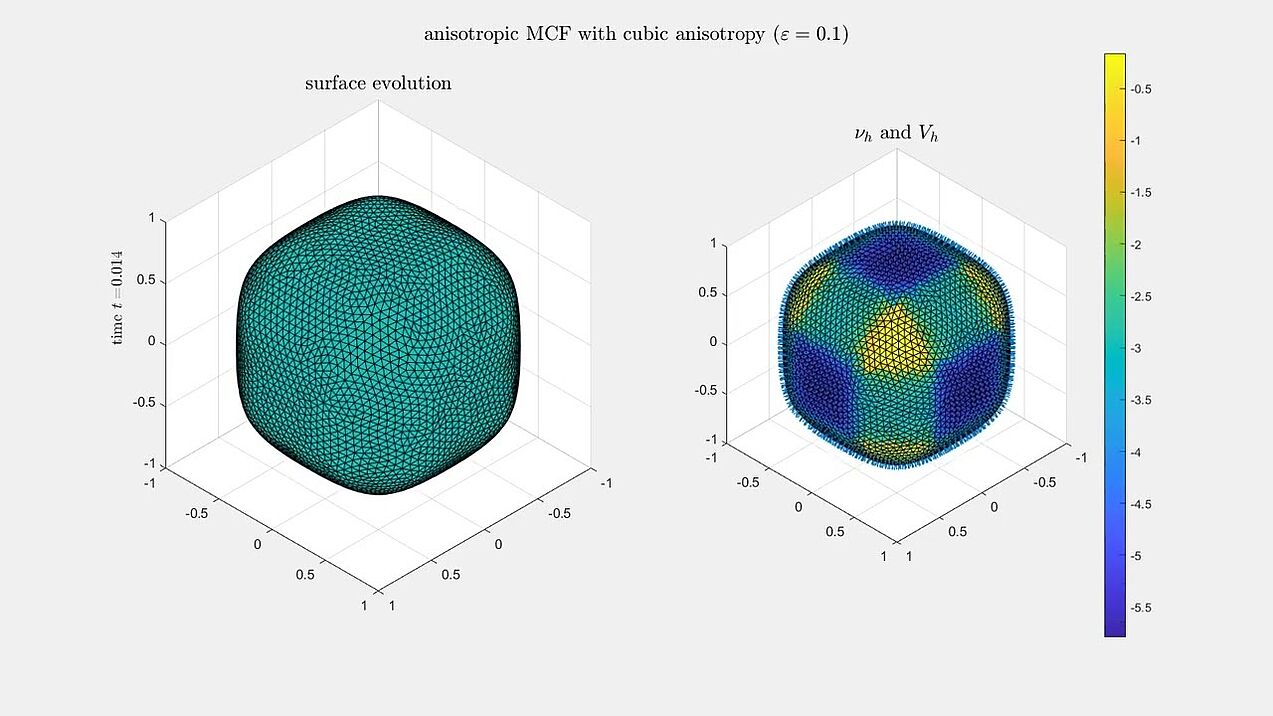
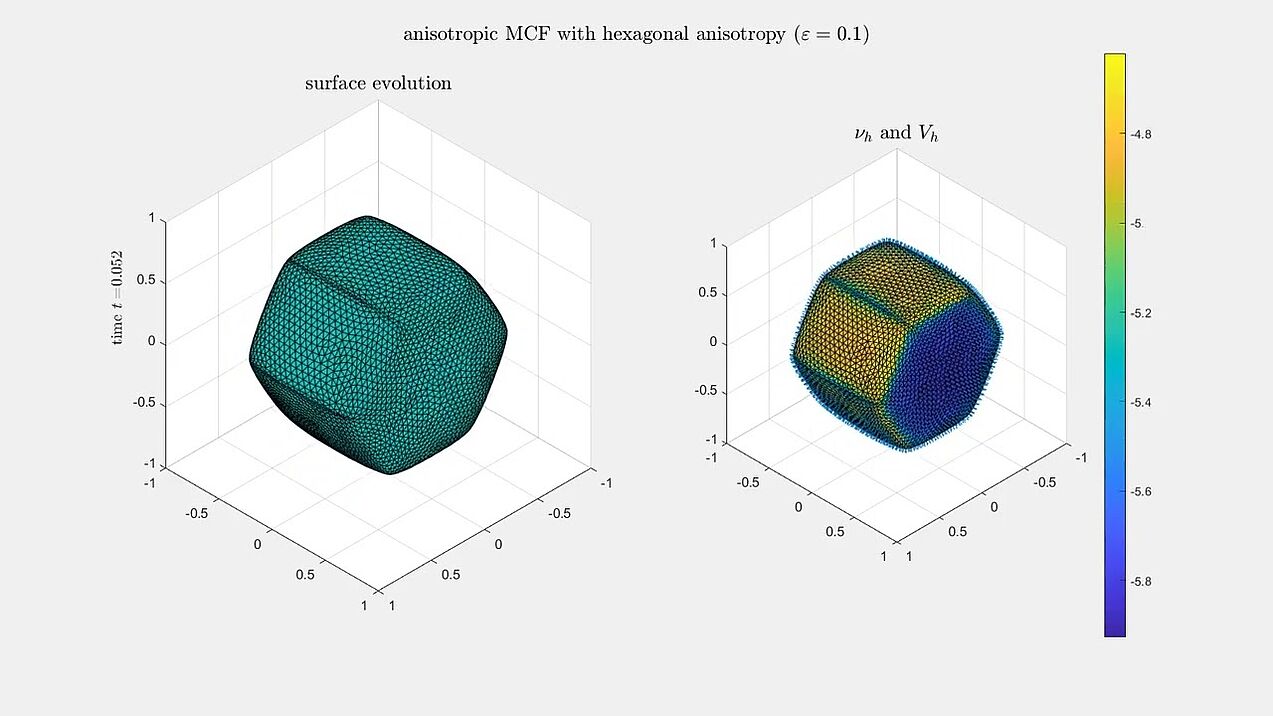
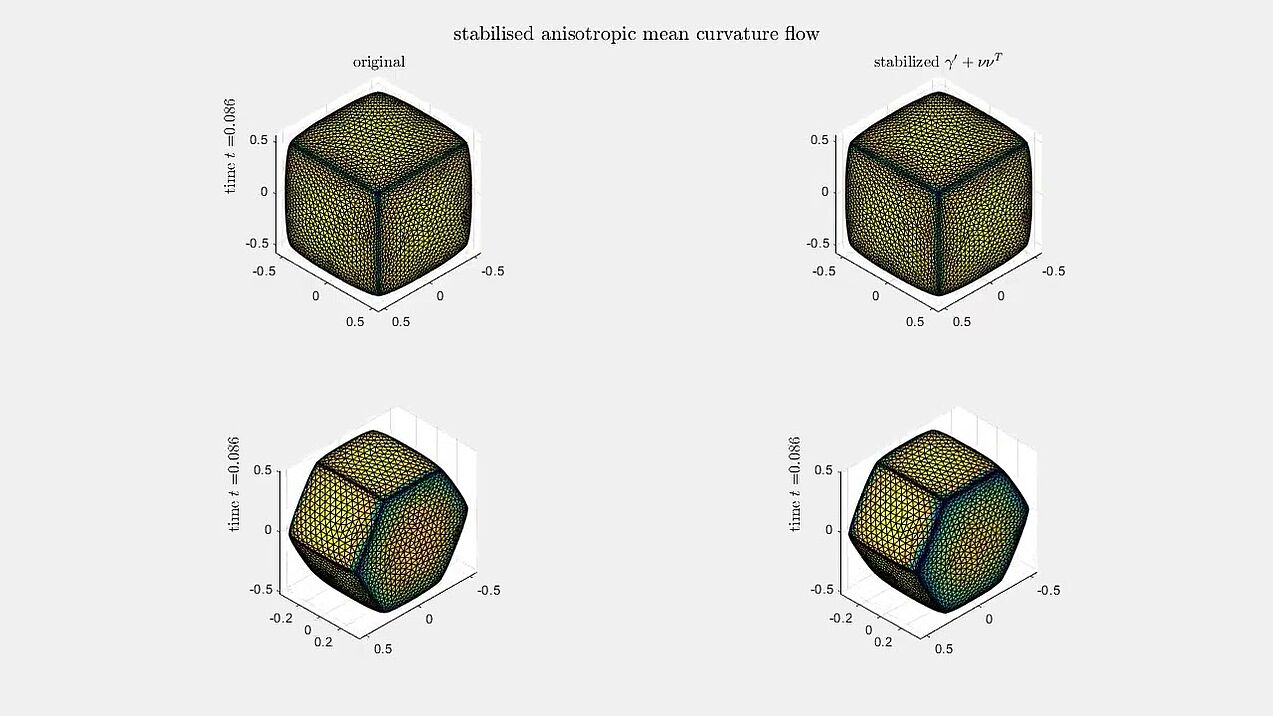
Numerical experiments for anisotropic mean curvature flow algorithm from our paper.
A sphere evolving under anisotropic mean curvature flow with a cubic and a hexagonal anisotropy.

Cahn-Hilliard equation with dynamic boundary conditions
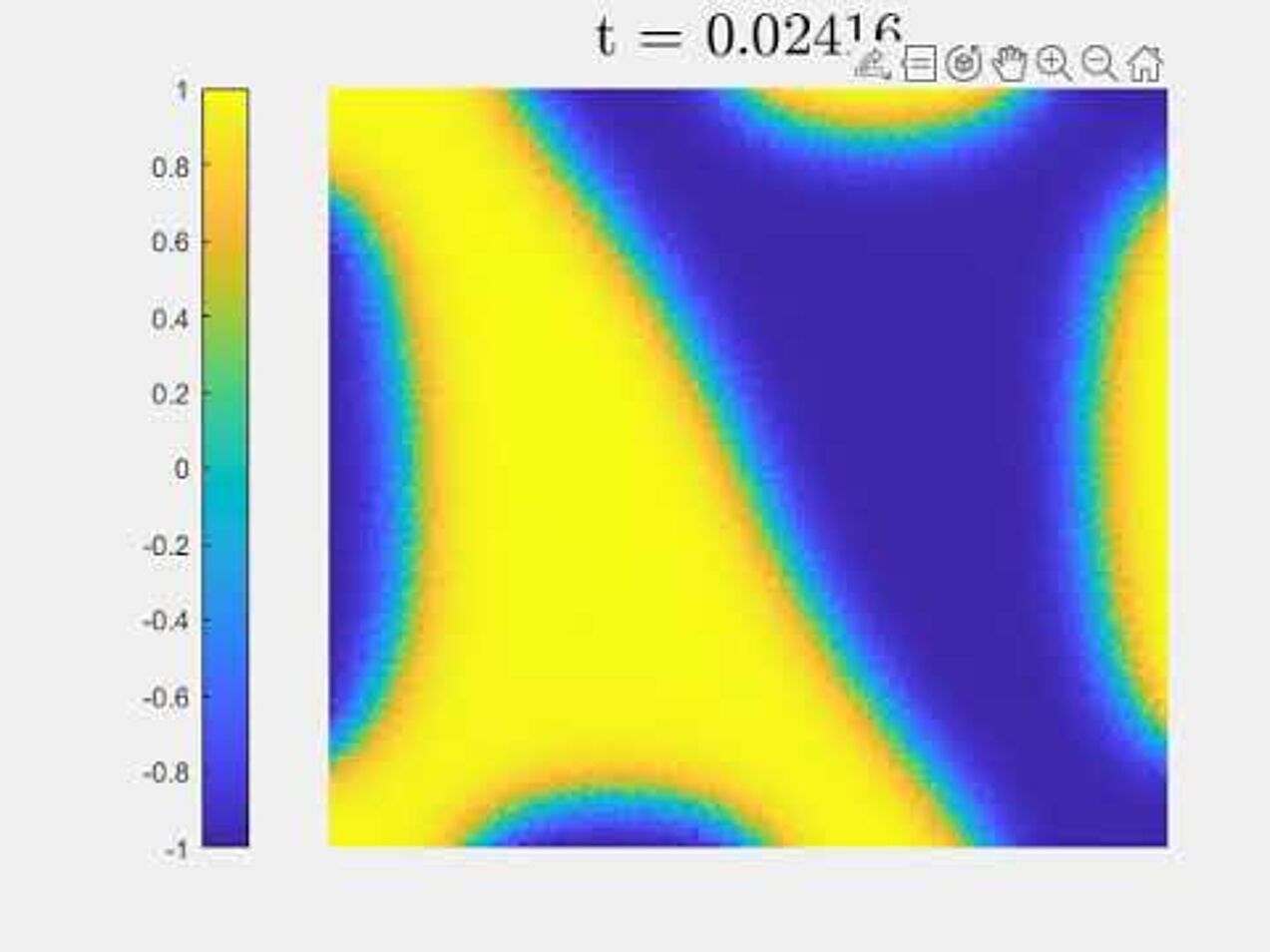
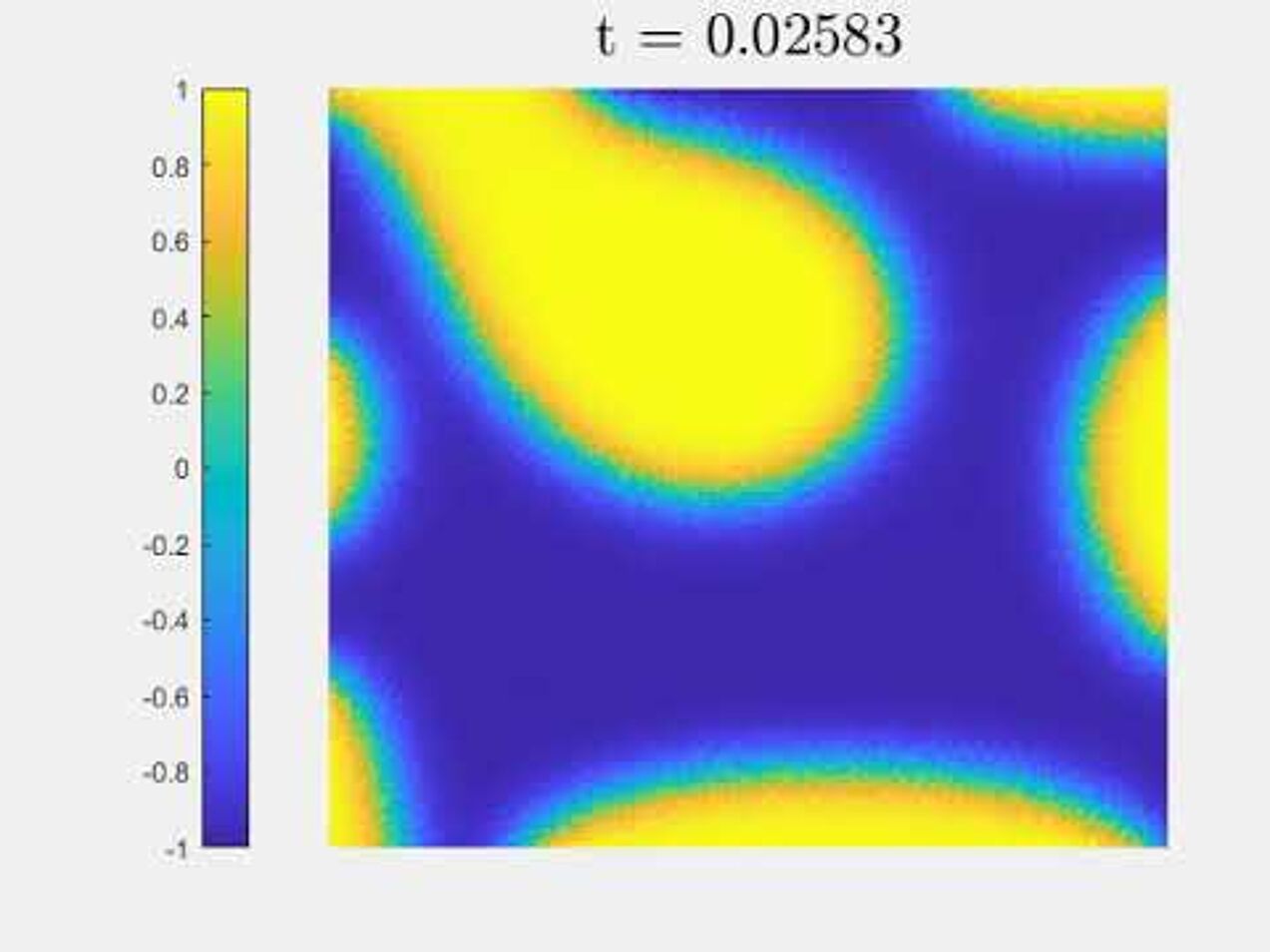
Numerical experiments for Cahn-Hilliard equation with dynmaic boundary conditions, with the algorithm from our paper.
An elliptically-shaped droplet evolving according to the GMS-model.
Bulk-surface Cahn-Hilliard system with dynamic boundary conditions
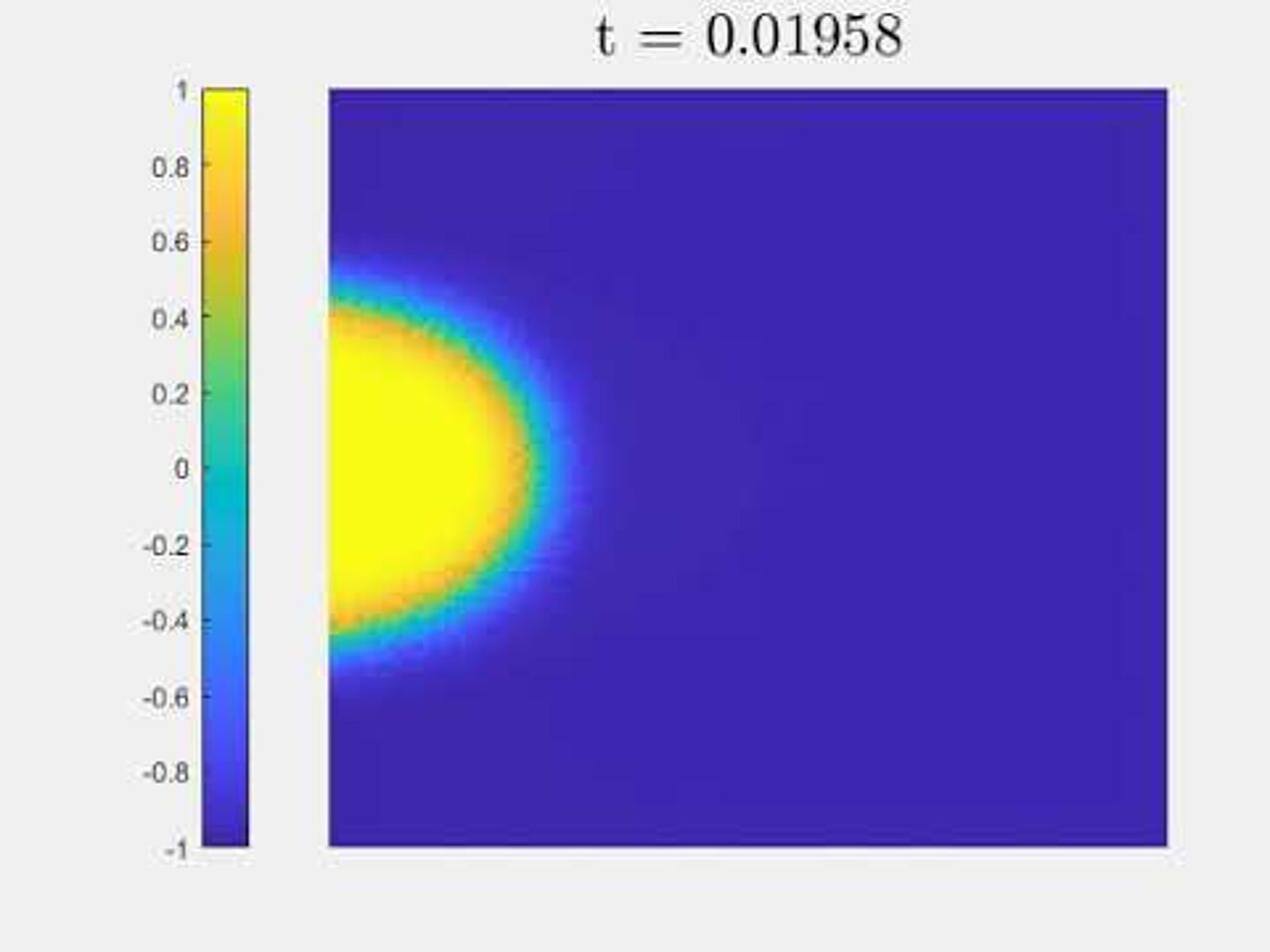
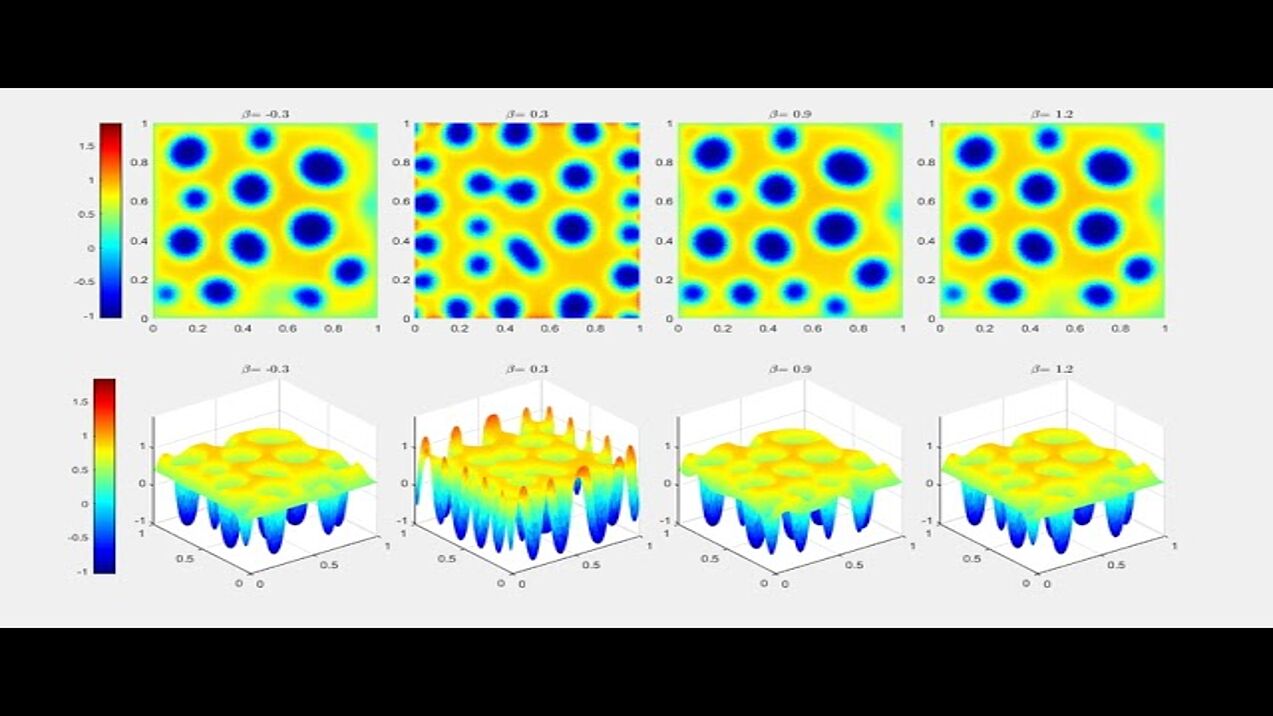
Numerical experiments for the bulk-surface Cahn-Hilliard system with general dynamic boundary conditions.
Evolution of a random initial data by the Cahn-Hilliard equation with transmission rate dependent dynamic boundary conditions with an affine linear transmission condition with constant parameter beta. Depending on the parameter beta we observe either Cahn-Hilliard phase-separation dynamics or near constant trace values.
Adaptivity for parabolic PDEs on stationary surfaces
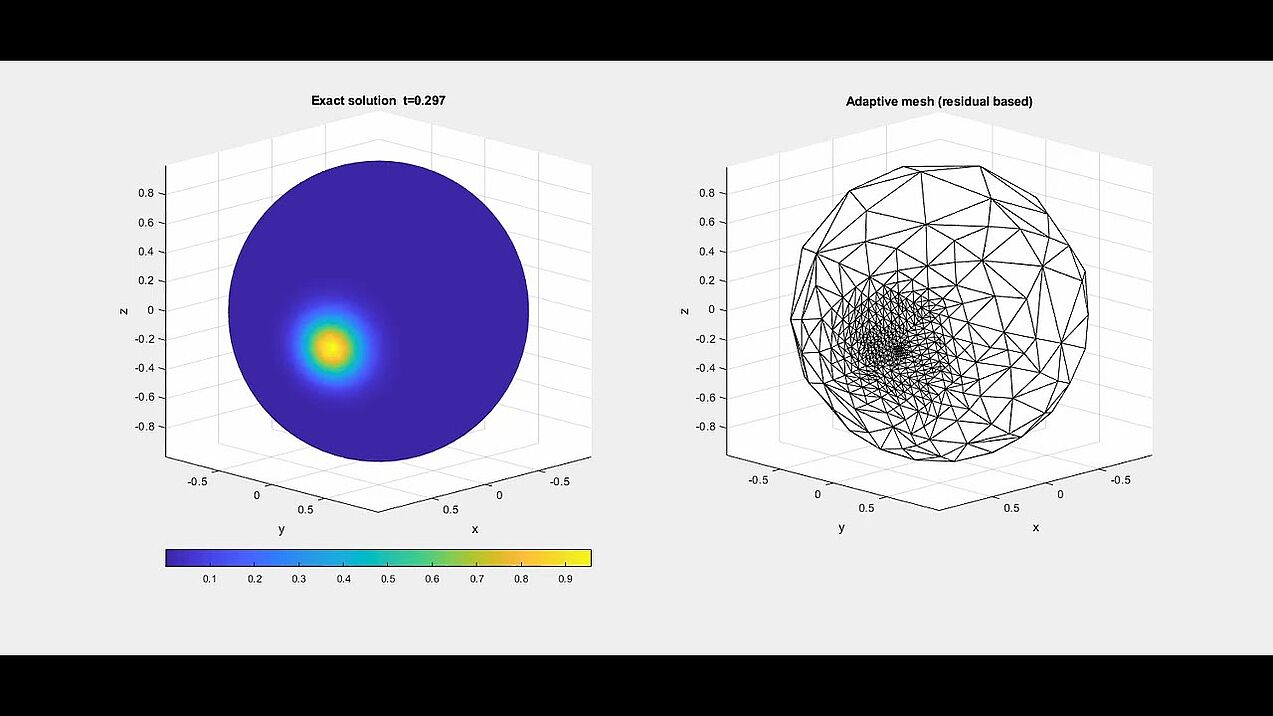
Numerical experiment of a residual based adaptive algorithm for parabolic PDEs on stationary surfaces.
We constructed an exact solution based on solving the parabolic heat equation on surfaces. This exact solution, a moving heat peak travelling along the equator while briefly vanishing for t=0.5, is presented on the left. The adaptive mesh for solving for the numerical solution, based on the residual based a posteriori error analysis, is given on the right.